Iceland’s Highlands – Summer
Embark on an unforgettable 11-day self-drive adventure through Iceland’s majestic highlands. This summer-only route takes you beyond the typical tourist path into lava deserts, calderas, geothermal valleys, and rugged fjords. From the iconic Golden Circle to the untamed heart of the country, you’ll navigate F-roads, explore Askja and Landmannalaugar, and enjoy rare moments of solitude amidst Iceland’s wildest landscapes.
Guided
self-drive (unguided)
Custom Dates /Fixed Dates
late June and early September
Price
Starting from £3,300 - £3,800 per person
Price Detail
Includes 10 nights' accommodation with breakfast, flights, rental of a 4x4 vehicle allowed on F-roads, and detailed itinerary. Optional add-ons, activities, and ferry crossings available at extra cost.
Day 1: Welcome to Iceland
Arrive at Keflavík Airport. Once you have picked up your rental vehicle, you head directly for Reykjavík, the colorful capital city of Iceland. If your flight arrives early enough, we have a great suggestion for starting your trip off the right way: plan a visit to Iceland’s world-famous Blue Lagoon (book online at www.bluelagoon.com) or to the Sky Lagoon, the newest spa and wellness attraction situated just a short drive from Reykjavík. Be sure to pack your swimsuit, so you can take a relaxing dip in either of those spa’s soothing geothermal waters before heading to your hotel.
Driving distance / time: approx. 50 km / 45 minutes
Overnight: in Reykjavík
Suggested add-ons, on request: Sky Lagoon; Whale-watching from Reykjavík;
FlyOver Iceland
Day 2: Reykjavík – Golden Circle
Drive to Thingvellir National Park, a UNESCO world heritage site and one of the geological wonders of the world. Here, you can see the effects of the movements of tectonic plates. Observe various cracks and fissures in the earth’s crust.
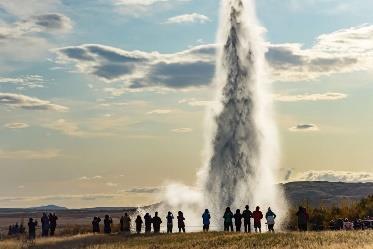
Continue to the famous Geysir geothermal area where the Strokkur hot spring ejects its water column high into the air every 5 to 10 minutes. Discover numerous small springs boil and bubble all around you. Afterwards you only have a short drive to reach Gullfoss, surely one of the country’s most beautiful waterfalls.
Driving distance / time: approx. 150 km / 2 hours
Overnight: in Laugarvatn, Geysir or Flúdir area
Suggested add-ons, on request: Snowmobile on Langjökull glacier; Secret
Lagoon
Day 3: Kjölur – Hveravellir – Skagafjördur
Today you head north into the highland region along Kjölur mountain track. This part of the interior highlands lies between two of Iceland’s main icecaps, Langjökull and Hofsjökull. In the old times, this used to be an important road that linked the North and the South but with time this area became more and more barren and today, you will be driving across an open desertlike area where glaciers and mountains are the only thing to be seen on the horizon. Kerlingingarfjöll mountain range is among them and is worth a detour to visit the amazing Hveradalir Valley where you will find a magnificient geothermal area surrounded by micro-glaciers. Further north, in the middle of Kjölur track, you will also find the hot spring area of Hveravellir, an oasis in the midst of Iceland’s highlands. There, you should make a stop and take a walk around the hot springs and even bathe in natural warm water before you continue your way to the north. After crossing the highland, you reach road n°1 and turn east in the direction of Skagafjördur. Discover this region known for exceptional horse breeding. In fact, many stunning, Icelandic horses can be seen along the road in many places. Take some time to visit the museum at Glaumbær, a beautifully restored turf farmhouse, one of the few that has been properly preserved in Iceland. Nearby, stop at the Vídimýri church, which was built in 1834 using turf as well and is one of the few that has been preserved in the country.
Driving distance / time: approx. 250-280 km / 4-5 hours
Overnight: in Skagafjördur area
Day 4: Eyjafjördur – Godafoss – Mývatn
Continue to Eyjafjördur fjord further to the East, driving through Öxnadalsheidi mountain pass. When in Eyjafjördur area, take some time to discover the charming, little town of Akureyri, the “capital of the North”. Then continue towards Lake Mývatn and its many natural wonders, including fantastic volcanic formations, geothermal activity, and the lake itself, teeming with bird life. Take a walk around the pseudo-craters of Skútustadir, or through the labyrinthine lava formations of Dimmuborgir, the “dark citadel.” Next, visit the geothermal area of Námaskard, where numerous solfataras, fumaroles, and bubbling mud pots emit strong sulfuric odours. Finally, explore the volcanic zone of the Krafla volcano, where you will discover the explosive crater of Víti and the extraordinary geothermal area of Leirhnjúkur. It was here that between 1975 and 1984, a series of volcanic eruptions left behind a series of small craters and a vast expanse of black lava. Halfway between Akureyri and Mývatn, also plan a stop at Godafoss waterfall, a beautiful site where the Skjálfandi river has created a magnificent arrangement of cascades.
Driving distance / time: approx. 200-250 km / 2,5-3 hours
Overnight: in Mývatn or Húsavík area
Suggested add-ons, on request: Mývan Nature Baths
Day 5: Húsavík – Tjörnes – Ásbyrgi – Dettifoss
Húsavík is a charming fishing village and one of the most popular places for whale watching tours in Iceland. From there, we recommend that you drive around the Tjörnes Peninsula. At Tjörnes lighthouse at its northernmost tip, walking very carefully along the grassy cliffs overlooking the waters of the Arctic Ocean, you have a chance to observe a colony of puffins from spring until early August.
Further along the waym, discover Ásbyrgi, an impressive horseshoe-shaped gorge and former bed of the great glacial river Jökulsá á Fjöllum. It’s the same turbulent river that you will later discover in its present course at Dettifoss, Europe’s most powerful waterfall, which marks the beginning of the stunning Jökulsárgljúfur canyon and National Park.
Driving distance / time: approx. 200-220 km / 3 hours
Overnight: in Mývatn or Húsavík area
Suggested add-ons, on request: Whale-watching in Húsavík
Day 6: Mývatn – Herdubreid – Askja – Egilsstadir
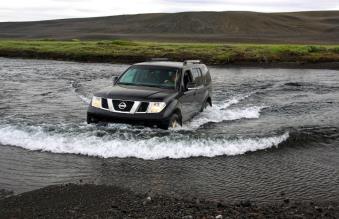
Discover the desertic region of Ódadahraun, the most extensive lava field in Iceland. The vegetation decreases noticeably and a vaste wasteland made of ancient lava fields and pumise surrounds you. To get to Askja caldeira, drive east from Myvatn and continue south on F88 dirt road or, for a safer but longer itinerary, opt for mountain track F905 further east and then F910 south of Upptypingar mountain. On those roads, you will have to pass through rivers, so please be careful, especially along road F88. Also remember that all off-road driving is strictly forbiden and harshly punished by Icelandic authotiries. As you approach Askja, you will see the unique silhouette of Herdurbreid, a strikingly shaped table volcano. Further south, you reach the Askja volcanic system along road F910, and from the mountain hut, you can reach the caldeira of the volcano along road F894. At the end of this track, walk approx. 2.5km to reach Öskjuvatn Lake and Viti explosive crater. From Askja, take road F910 eastward towards Egilsstadir. You cross the glacial river Jökulsa a Fjöllum on the bridge nearby Upptyppingar. The most direct route to Egilsstadir is then via roads F905, F910 and 923, until you reach ring road n°1.
Driving distance / time: approx. 320-350 km / 7-8 hours
Overnight: in Egilsstadir area
Day 7: East Fjords – Höfn
Discover the East Fjords between the small towns of Egillsstadir and Höfn. Starting from Reydarfjördur fjord, where a small World War II history museum is located, you continue along the fjords toward Southeast Iceland. In Stödvarfjördur a local lady has collected an impressive number of minerals and stones, presented in Petra’s Stone Collection.
Passing small fishing villages like Breiddalsvik and Djúpivogur, at times the road hangs precariously high on the mountain slopes. Between the capes of Hvalnes and Stokknes, you pass through the beautiful Lónsvík bay. Occasionally, along the road and depending on the season, you might catch a glimpse of a herd of reindeer or observe the graceful flight of swans. As you approach your destination, you drive through the tunnel of Almannaskard and enter in the Höfn region. You are now in the realm of Vatnajökull ice cap. With an area comparable to that of the islands of Corsica or Puerto Rico, not only is it Iceland’s largest glacier but also the largest in Europe! Alternatively, between Egilsstadir and Djúpivogur, you can also choose to drive along road n°1 and then over the breathtaking Öxi mountain pass leading you down to Berufjördur fjord.
Driving distance / time: approx. 200-300 km / 3-4 hours
Overnight: in Höfn area
Day 8: Jökulsárlón – Skaftafell – Kirkjubæjarklaustur or Vík
Discover Iceland’s scenic southeast. Explore Vatnajökull Glacier area, observing numerous glacial outlets along your route. At Jökulsárlón glacial lagoon, the glacier breaks into stunning icebergs that drift peacefully towards the ocean (“Diamond Beach”). This exceptional site sits at the foot of Iceland’s highest mountain, Hvannadalshnúkur. Further to the west, Skaftafell National Park, where multiple hikes are possible, including up to the beautiful Svartifoss waterfall. Under the gaze of Hvannadalshnúkur peak, this area is a true oasis bordered by the glacial tongues of Vatnajökull on one side and vast volcanic sand plains on the other. Drive through Skeidarársandur sand plains towards the towering cliffs of Lómagnúpur, Iceland’s highest at 670m. In the beautiful region of Kirkjubæjarklaustur, take the time to discover the beautiful Fjardrárgljúfur canyon and drive across the vast Eldhraun lava field, a result of the major Laki eruption that occurred in 1783 and was arguably one of the greatest disasters in Iceland’s history.
Driving distance / time: approx. 200-280 km / 2,5-3,5 hours
Overnight: in Vík or Kirkjubæjarklaustur area
Suggested add-ons ons, on request: Amphibian boat or zodiac tour on
Jökulsárlón glacial lagoon; Glacier walk in Skaftafell National Park
Day 9: Eldgja – Landmannalaugar – Hella or Hvolsvöllur
Along the highland road F208, also known as Fjallabaksleid, “behind the mountains”, you reach the Nature Reserve of Fjallabak, surely one of the most beautiful areas of Iceland’s highlands. First, explore the volcanic fissure of Eldgjá and hike to the beautiful Ófærufoss waterfall. Then, crossing many streams and rivers and driving through a moonlike lava-landscape, you reach Landmannalaugar.
Here you can hike between colorful mountains, black obsidian lava and hot springs. Get comprehensive information about all hiking tracks in the warden hut. After hiking, you even have the posibility to relax in a natural geothermal spring close to the mountain hut. Continue towards Landmannahellir mossy plains and Hekla volcano moon-like landscapes on road F225 before ending this incredible day through the farmlands of Hella and Hvolsvöllur region.
Driving distance / time: approx. 250 km / 5-6 hours
Overnight: in Hella or Hvolsvöllur area
Day 10: South Shore – Reykjavík
Today, in the vicinity of Katla and Eyjafjalajökull volcanoes, south of Mýrdalsjökull glacier, take some time to explore the South Shore area around Vík and Skógar. Discover beautiful sites such as Seljalandsfoss and Skógarfoss waterfalls and Reynisfjara beach. Also, take a short detour to Dyrhólaey promontory, the southernmost point of Iceland. A small road takes you to the top of this 120 m high sea cliff where you often can see some puffins from late April to early August. However, note that access to Dyrhólaey is closed during nesting season, approx. from May 15 until June 23. Past mid-August, the puffins have all gone out to sea and are nowhere to be seen!
You might also want to take some time to explore the Sólheimajökull glacier outlet and its breathtaking surroundings! Continuing westbound, end your day in Reykjavík where you will spend your last night in Iceland.
Driving distance / time: approx. 280 km / 4 hours
Overnight: in Reykjavík
Suggested add-ons, on request: Glacier walk on Sólheimajökull glacier;
Snwomobile tour on Mýrdalsjökull glacier; ATV tour on black sand beach
Day 11: Departure
It is now time to head back home, after an amazing journey through some of the world’s most picturesque landscapes. Drive to Keflavík International Airport and return your rental car before your flight home. Depending on your flight schedule, you may be able to enjoy your last day strolling around Reykjavík or discover some of its attractions.
Driving distance / time: approx. 50 km / 45 minutes
Note: From late June to early September only. Rental of a 4×4 vehicles allowed on F-roads is mandatory for this itinerary. Bigger 4×4 cars such as Toyota Land Cruiser or similar are strongly recommended. Smaller 4×4 cars such as Dacia Duster or similar are not recommended on some mountain roads such as F88 to Askja, even though they are allowed on F-roads. Important reminder: Drivers must always exercise caution and good judgment before fording a river. They will always be solely responsible for their decision to cross a river and for any consequences that may arise. General information and advice: https://www.hertz.is/driving-in-iceland/iceland-river-crossing-driving/
Overview
Embark on an unforgettable 11-day self-drive adventure through Iceland’s majestic highlands. This summer-only route takes you beyond the typical tourist path into lava deserts, calderas, geothermal valleys, and rugged fjords. From the iconic Golden Circle to the untamed heart of the country, you’ll navigate F-roads, explore Askja and Landmannalaugar, and enjoy rare moments of solitude amidst Iceland’s wildest landscapes.
Guided
self-drive (unguided)
Custom Dates /Fixed Dates
late June and early September
Prices
Price
Starting from £3,300 - £3,800 per person
Price Detail
Includes 10 nights' accommodation with breakfast, flights, rental of a 4x4 vehicle allowed on F-roads, and detailed itinerary. Optional add-ons, activities, and ferry crossings available at extra cost.
Itinerary
Day 1: Welcome to Iceland
Arrive at Keflavík Airport. Once you have picked up your rental vehicle, you head directly for Reykjavík, the colorful capital city of Iceland. If your flight arrives early enough, we have a great suggestion for starting your trip off the right way: plan a visit to Iceland’s world-famous Blue Lagoon (book online at www.bluelagoon.com) or to the Sky Lagoon, the newest spa and wellness attraction situated just a short drive from Reykjavík. Be sure to pack your swimsuit, so you can take a relaxing dip in either of those spa’s soothing geothermal waters before heading to your hotel.
Driving distance / time: approx. 50 km / 45 minutes
Overnight: in Reykjavík
Suggested add-ons, on request: Sky Lagoon; Whale-watching from Reykjavík;
FlyOver Iceland
Day 2: Reykjavík – Golden Circle
Drive to Thingvellir National Park, a UNESCO world heritage site and one of the geological wonders of the world. Here, you can see the effects of the movements of tectonic plates. Observe various cracks and fissures in the earth’s crust.
Continue to the famous Geysir geothermal area where the Strokkur hot spring ejects its water column high into the air every 5 to 10 minutes. Discover numerous small springs boil and bubble all around you. Afterwards you only have a short drive to reach Gullfoss, surely one of the country’s most beautiful waterfalls.
Driving distance / time: approx. 150 km / 2 hours
Overnight: in Laugarvatn, Geysir or Flúdir area
Suggested add-ons, on request: Snowmobile on Langjökull glacier; Secret
Lagoon
Day 3: Kjölur – Hveravellir – Skagafjördur
Today you head north into the highland region along Kjölur mountain track. This part of the interior highlands lies between two of Iceland’s main icecaps, Langjökull and Hofsjökull. In the old times, this used to be an important road that linked the North and the South but with time this area became more and more barren and today, you will be driving across an open desertlike area where glaciers and mountains are the only thing to be seen on the horizon. Kerlingingarfjöll mountain range is among them and is worth a detour to visit the amazing Hveradalir Valley where you will find a magnificient geothermal area surrounded by micro-glaciers. Further north, in the middle of Kjölur track, you will also find the hot spring area of Hveravellir, an oasis in the midst of Iceland’s highlands. There, you should make a stop and take a walk around the hot springs and even bathe in natural warm water before you continue your way to the north. After crossing the highland, you reach road n°1 and turn east in the direction of Skagafjördur. Discover this region known for exceptional horse breeding. In fact, many stunning, Icelandic horses can be seen along the road in many places. Take some time to visit the museum at Glaumbær, a beautifully restored turf farmhouse, one of the few that has been properly preserved in Iceland. Nearby, stop at the Vídimýri church, which was built in 1834 using turf as well and is one of the few that has been preserved in the country.
Driving distance / time: approx. 250-280 km / 4-5 hours
Overnight: in Skagafjördur area
Day 4: Eyjafjördur – Godafoss – Mývatn
Continue to Eyjafjördur fjord further to the East, driving through Öxnadalsheidi mountain pass. When in Eyjafjördur area, take some time to discover the charming, little town of Akureyri, the “capital of the North”. Then continue towards Lake Mývatn and its many natural wonders, including fantastic volcanic formations, geothermal activity, and the lake itself, teeming with bird life. Take a walk around the pseudo-craters of Skútustadir, or through the labyrinthine lava formations of Dimmuborgir, the “dark citadel.” Next, visit the geothermal area of Námaskard, where numerous solfataras, fumaroles, and bubbling mud pots emit strong sulfuric odours. Finally, explore the volcanic zone of the Krafla volcano, where you will discover the explosive crater of Víti and the extraordinary geothermal area of Leirhnjúkur. It was here that between 1975 and 1984, a series of volcanic eruptions left behind a series of small craters and a vast expanse of black lava. Halfway between Akureyri and Mývatn, also plan a stop at Godafoss waterfall, a beautiful site where the Skjálfandi river has created a magnificent arrangement of cascades.
Driving distance / time: approx. 200-250 km / 2,5-3 hours
Overnight: in Mývatn or Húsavík area
Suggested add-ons, on request: Mývan Nature Baths
Day 5: Húsavík – Tjörnes – Ásbyrgi – Dettifoss
Húsavík is a charming fishing village and one of the most popular places for whale watching tours in Iceland. From there, we recommend that you drive around the Tjörnes Peninsula. At Tjörnes lighthouse at its northernmost tip, walking very carefully along the grassy cliffs overlooking the waters of the Arctic Ocean, you have a chance to observe a colony of puffins from spring until early August.
Further along the waym, discover Ásbyrgi, an impressive horseshoe-shaped gorge and former bed of the great glacial river Jökulsá á Fjöllum. It’s the same turbulent river that you will later discover in its present course at Dettifoss, Europe’s most powerful waterfall, which marks the beginning of the stunning Jökulsárgljúfur canyon and National Park.
Driving distance / time: approx. 200-220 km / 3 hours
Overnight: in Mývatn or Húsavík area
Suggested add-ons, on request: Whale-watching in Húsavík
Day 6: Mývatn – Herdubreid – Askja – Egilsstadir
Discover the desertic region of Ódadahraun, the most extensive lava field in Iceland. The vegetation decreases noticeably and a vaste wasteland made of ancient lava fields and pumise surrounds you. To get to Askja caldeira, drive east from Myvatn and continue south on F88 dirt road or, for a safer but longer itinerary, opt for mountain track F905 further east and then F910 south of Upptypingar mountain. On those roads, you will have to pass through rivers, so please be careful, especially along road F88. Also remember that all off-road driving is strictly forbiden and harshly punished by Icelandic authotiries. As you approach Askja, you will see the unique silhouette of Herdurbreid, a strikingly shaped table volcano. Further south, you reach the Askja volcanic system along road F910, and from the mountain hut, you can reach the caldeira of the volcano along road F894. At the end of this track, walk approx. 2.5km to reach Öskjuvatn Lake and Viti explosive crater. From Askja, take road F910 eastward towards Egilsstadir. You cross the glacial river Jökulsa a Fjöllum on the bridge nearby Upptyppingar. The most direct route to Egilsstadir is then via roads F905, F910 and 923, until you reach ring road n°1.
Driving distance / time: approx. 320-350 km / 7-8 hours
Overnight: in Egilsstadir area
Day 7: East Fjords – Höfn
Discover the East Fjords between the small towns of Egillsstadir and Höfn. Starting from Reydarfjördur fjord, where a small World War II history museum is located, you continue along the fjords toward Southeast Iceland. In Stödvarfjördur a local lady has collected an impressive number of minerals and stones, presented in Petra’s Stone Collection.
Passing small fishing villages like Breiddalsvik and Djúpivogur, at times the road hangs precariously high on the mountain slopes. Between the capes of Hvalnes and Stokknes, you pass through the beautiful Lónsvík bay. Occasionally, along the road and depending on the season, you might catch a glimpse of a herd of reindeer or observe the graceful flight of swans. As you approach your destination, you drive through the tunnel of Almannaskard and enter in the Höfn region. You are now in the realm of Vatnajökull ice cap. With an area comparable to that of the islands of Corsica or Puerto Rico, not only is it Iceland’s largest glacier but also the largest in Europe! Alternatively, between Egilsstadir and Djúpivogur, you can also choose to drive along road n°1 and then over the breathtaking Öxi mountain pass leading you down to Berufjördur fjord.
Driving distance / time: approx. 200-300 km / 3-4 hours
Overnight: in Höfn area
Day 8: Jökulsárlón – Skaftafell – Kirkjubæjarklaustur or Vík
Discover Iceland’s scenic southeast. Explore Vatnajökull Glacier area, observing numerous glacial outlets along your route. At Jökulsárlón glacial lagoon, the glacier breaks into stunning icebergs that drift peacefully towards the ocean (“Diamond Beach”). This exceptional site sits at the foot of Iceland’s highest mountain, Hvannadalshnúkur. Further to the west, Skaftafell National Park, where multiple hikes are possible, including up to the beautiful Svartifoss waterfall. Under the gaze of Hvannadalshnúkur peak, this area is a true oasis bordered by the glacial tongues of Vatnajökull on one side and vast volcanic sand plains on the other. Drive through Skeidarársandur sand plains towards the towering cliffs of Lómagnúpur, Iceland’s highest at 670m. In the beautiful region of Kirkjubæjarklaustur, take the time to discover the beautiful Fjardrárgljúfur canyon and drive across the vast Eldhraun lava field, a result of the major Laki eruption that occurred in 1783 and was arguably one of the greatest disasters in Iceland’s history.
Driving distance / time: approx. 200-280 km / 2,5-3,5 hours
Overnight: in Vík or Kirkjubæjarklaustur area
Suggested add-ons ons, on request: Amphibian boat or zodiac tour on
Jökulsárlón glacial lagoon; Glacier walk in Skaftafell National Park
Day 9: Eldgja – Landmannalaugar – Hella or Hvolsvöllur
Along the highland road F208, also known as Fjallabaksleid, “behind the mountains”, you reach the Nature Reserve of Fjallabak, surely one of the most beautiful areas of Iceland’s highlands. First, explore the volcanic fissure of Eldgjá and hike to the beautiful Ófærufoss waterfall. Then, crossing many streams and rivers and driving through a moonlike lava-landscape, you reach Landmannalaugar.
Here you can hike between colorful mountains, black obsidian lava and hot springs. Get comprehensive information about all hiking tracks in the warden hut. After hiking, you even have the posibility to relax in a natural geothermal spring close to the mountain hut. Continue towards Landmannahellir mossy plains and Hekla volcano moon-like landscapes on road F225 before ending this incredible day through the farmlands of Hella and Hvolsvöllur region.
Driving distance / time: approx. 250 km / 5-6 hours
Overnight: in Hella or Hvolsvöllur area
Day 10: South Shore – Reykjavík
Today, in the vicinity of Katla and Eyjafjalajökull volcanoes, south of Mýrdalsjökull glacier, take some time to explore the South Shore area around Vík and Skógar. Discover beautiful sites such as Seljalandsfoss and Skógarfoss waterfalls and Reynisfjara beach. Also, take a short detour to Dyrhólaey promontory, the southernmost point of Iceland. A small road takes you to the top of this 120 m high sea cliff where you often can see some puffins from late April to early August. However, note that access to Dyrhólaey is closed during nesting season, approx. from May 15 until June 23. Past mid-August, the puffins have all gone out to sea and are nowhere to be seen!
You might also want to take some time to explore the Sólheimajökull glacier outlet and its breathtaking surroundings! Continuing westbound, end your day in Reykjavík where you will spend your last night in Iceland.
Driving distance / time: approx. 280 km / 4 hours
Overnight: in Reykjavík
Suggested add-ons, on request: Glacier walk on Sólheimajökull glacier;
Snwomobile tour on Mýrdalsjökull glacier; ATV tour on black sand beach
Day 11: Departure
It is now time to head back home, after an amazing journey through some of the world’s most picturesque landscapes. Drive to Keflavík International Airport and return your rental car before your flight home. Depending on your flight schedule, you may be able to enjoy your last day strolling around Reykjavík or discover some of its attractions.
Driving distance / time: approx. 50 km / 45 minutes
Need to Know
Note: From late June to early September only. Rental of a 4×4 vehicles allowed on F-roads is mandatory for this itinerary. Bigger 4×4 cars such as Toyota Land Cruiser or similar are strongly recommended. Smaller 4×4 cars such as Dacia Duster or similar are not recommended on some mountain roads such as F88 to Askja, even though they are allowed on F-roads. Important reminder: Drivers must always exercise caution and good judgment before fording a river. They will always be solely responsible for their decision to cross a river and for any consequences that may arise. General information and advice: https://www.hertz.is/driving-in-iceland/iceland-river-crossing-driving/

Enquire Now
Have questions or want to personalise your trip? Our travel experts are ready to help you tailor the perfect itinerary. Get in touch today — no commitment, just friendly advice.